

How to Rank a Telegram Bot in Search: A Practical SEO Guide
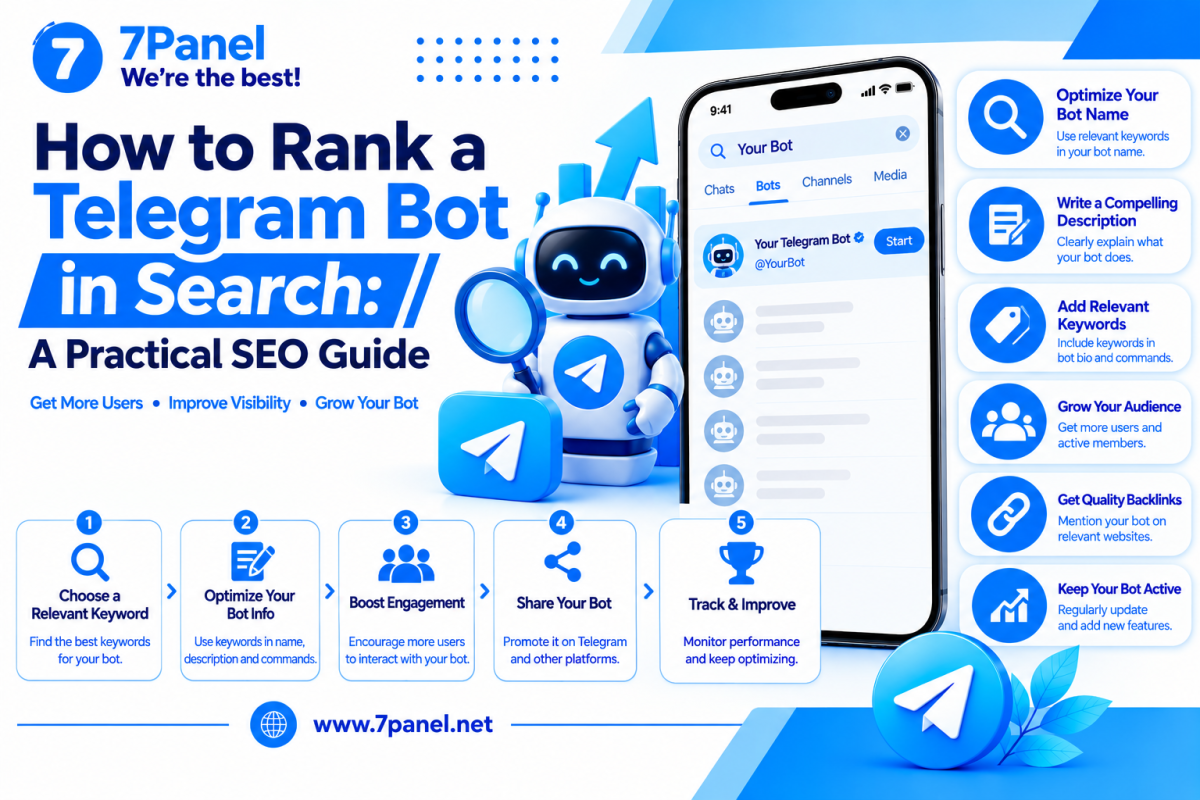
Telegram has become an important platform for discovering bots that help users automate tasks, access information, manage communities, play games, and use online services. However, creating a useful bot is only the first step. If people cannot find it when searching on Telegram, reaching new users becomes much more difficult.
This is why Telegram Bot SEO matters. A clear bot name, a relevant username, an informative description, and a useful user experience can all help make your bot easier to recognize and discover.
If you want to learn how to rank a Telegram bot in search, this guide explains the practical steps you should take, from preparing your bot profile to building genuine user activity and maintaining long-term visibility.

1. Choose an SEO-Friendly Telegram Bot Name
Your bot's display name is one of the first things users notice when they encounter it in Telegram search results. It should immediately communicate what the bot does.
A good bot name should be:
- Relevant to the bot's main purpose.
- Easy to read and remember.
- Closely related to the search terms your potential users may enter.
- Distinctive enough to separate your bot from similar bots.
- Natural rather than overloaded with keywords.
For example, imagine that you have developed a bot that provides currency exchange rates.
A vague name such as "My Assistant" does not explain its purpose. A more descriptive name such as "Currency Rate Bot" gives users a clearer idea of what they can expect.
The goal is not to insert as many keywords as possible. Instead, choose a name that accurately describes the service and naturally includes the most relevant term when appropriate.
Should You Put Keywords in Your Bot Name?
Using a keyword related to the bot can help the user figure out the purpose of the bot and know that the bot is associated with their query. This does not necessarily mean that using a keyword will boost your ranking.
Try to avoid names which contain the same keyword more than once, or popular keywords which have no relevance with your bot.
2. Create a Relevant Telegram Bot Username
Your Telegram bot username is different from its display name. It is the unique identifier users can use to find and access your bot.
A suitable username should be:
- Short enough to remember.
- Closely connected to the bot's name or brand.
- Easy to spell.
- Free from unnecessary numbers and complicated character combinations.
- Consistent with your website or other online presence, if applicable.
For example, if your bot helps users translate text, a username related to translation is more meaningful than a random collection of letters and numbers.
Keep Your Bot Name and Username Consistent
Your display name and username should communicate the same identity.
If your bot is called "Quick Translator," a username that clearly relates to translation makes the profile easier to recognize.
Consistency also helps when users encounter your bot through external websites, social media posts, recommendations, or shared links.
Avoid changing the username or display name repeatedly without a clear reason. Frequent changes can confuse existing users and make your bot's identity less consistent across different sources.
3. Write a Clear and Keyword-Relevant Bot Description

The description of the bot is one of the critical elements that contribute to the formation of your public persona, as it allows potential users to know what services the bot provides before deciding whether to use it.
The poor description is not informative at all:
"Welcome to our bot. Have fun!"
While the better description specifies the service provided by the bot:
"You can use this bot to make currency conversion, to look for the updated exchange rates and use currency tools via Telegram."
How to Write a Better Bot Description
Follow these recommendations:
- Explain the bot's main function in the first sentence.
- Include your primary topic naturally.
- Mention the most important features.
- Explain what users can do after starting the bot.
- Avoid unnecessary promotional language.
- Keep the description readable and concise.
Do not turn the description into a list of unrelated keywords. It should be written for people, not just search engines.
A good description sets accurate expectations. If users open a bot expecting a service that it does not actually provide, they may leave immediately.
4. Make Sure Your Bot Is Public and Accessible
Before focusing on visibility, make sure people can actually access your bot.
A Telegram bot should have a valid public username and a working link that opens the correct bot profile.
Test your bot's public link from another Telegram account or device. Check that:
- The link opens the intended bot.
- The username is correct.
- The bot can be started.
- Its description and profile information are visible.
- Its main features work as expected.
A bot that is difficult to access or has a broken start experience creates unnecessary friction for potential users.
Also, make sure your bot follows Telegram's applicable platform rules. Avoid misleading identities, impersonation, and behavior that could cause users to report the bot.
5. Improve the Bot's First-Start Experience

Getting users to open your bot is not enough. The first interaction should make it clear why they should continue using it.
When someone presses the Start button, the bot should provide a useful and understandable response.
A strong first-start experience usually includes:
- A short welcome message.
- A clear explanation of the bot's purpose.
- Simple instructions.
- An obvious first action.
- A working menu or command system, where appropriate.
For example, a weather bot could immediately explain how users can check the weather and provide a button to select a city.
Avoid sending a long promotional message before showing users how the bot works. The faster users understand its value, the easier it becomes for them to decide whether to continue.
Make Important Features Easy to Find
Users should not have to guess which command they need.
Use clear menu buttons, understandable command names, and helpful responses. If your bot has several functions, organize them into logical categories.
A complicated interface can discourage users even when the underlying service is useful.
6. Build Genuine Bot Starts and Active Users
User activity is important for the long-term success of a Telegram bot. A bot that provides real value has more opportunities to attract returning users and recommendations.
Focus on attracting people who are genuinely interested in the service.
You can promote your bot through:
- Your website.
- Relevant blog articles.
- Social media accounts.
- Communities where bot promotion is permitted.
- Product documentation and tutorials.
- Partnerships with relevant websites or creators.
When promoting your bot, explain what problem it solves instead of simply asking people to start it.
For example, a file-conversion bot should be promoted to people who need file conversion, while a language-learning bot should be introduced to users interested in learning languages.
Why Genuine Users Matter
The number of bot starts alone does not explain whether a bot is useful.
Consider two situations:
- Bot A receives many starts, but most users leave immediately.
- Bot B receives fewer starts, but users regularly return and use its features.
The second bot may have a healthier product experience, even though its initial start count is lower.
Do not rely on artificial activity as a substitute for building a useful service. Purchased or automated starts do not guarantee search visibility, user retention, or better rankings.
7. Encourage Regular and Natural User Interaction
A Telegram bot should provide a reason for users to return.
Depending on its purpose, useful interaction may include:
- Answering user requests accurately.
- Providing updated information.
- Sending notifications that users have requested.
- Offering useful commands.
- Remembering appropriate user preferences.
- Making repeated tasks faster and easier.
For example, a reminder bot can encourage repeat usage by helping users create and manage reminders. A price-tracking bot can provide value through relevant updates.
However, regular interaction should never become unwanted messaging.
Avoid sending excessive promotional messages, unsolicited notifications, or repetitive content. Give users control over notification settings and respect their preferences.
The objective is to build a bot that people choose to use, not one that constantly interrupts them.
8. Maintain a Healthy and Trustworthy Bot Identity
Trust is essential for any service that interacts with users. A bot that looks suspicious, makes misleading promises, or behaves unpredictably may struggle to retain users.
To build a trustworthy identity:
- Use a recognizable profile image.
- Keep the bot name and description accurate.
- Explain how the bot works.
- Avoid impersonating other services.
- Do not request unnecessary personal information.
- Handle user data responsibly.
- Provide a way to contact support when appropriate.
If your bot belongs to a business or established product, keep its branding consistent with the official website and other communication channels.
A consistent identity makes it easier for users to verify that they are interacting with the correct bot.
9. Use a Professional Bot Profile Image
Your bot's profile image helps users identify it in search results, chats, and shared links.
A professional image should:
- Be recognizable at a small size.
- Match the bot's actual purpose or brand.
- Use simple shapes and readable visual elements.
- Avoid excessive text.
- Remain visually consistent with your website or product.
For example, a finance bot could use a simple financial symbol, while a translation bot could use a language-related visual identity.
Do not use misleading logos or images that imitate another established service. Your profile should represent your own bot clearly.
Although a profile image alone should not be treated as a guaranteed ranking factor, it can improve recognition and make the bot look more credible.
10. Avoid Common Telegram Bot SEO Mistakes
Some mistakes can make a bot harder to discover or reduce users' willingness to use it.
Keyword Stuffing
Repeating keywords in the display name or description makes the profile difficult to read.
Use only terms that accurately describe the bot.
Frequently Changing the Bot Name
Repeated name changes can confuse existing users and weaken consistency across your promotional materials.
Choose a suitable name before launching your promotion campaign.
Using an Unclear Username
Random usernames make it harder for people to remember or recognize your bot.
Choose an identifier that is connected to the bot's purpose or brand.
Sending Unwanted Messages
Excessive notifications and promotional messages can damage the user experience.
Only send messages that are useful, relevant, and permitted.
Attracting Irrelevant Users
Promoting a bot to audiences that have no interest in its service may produce visits without meaningful usage.
Focus on the audience that actually needs your bot.
Ignoring Technical Problems
Broken commands, slow responses, and unavailable features can cause users to stop interacting with the bot.
Test the bot regularly and fix problems as soon as possible.
11. Promote Your Telegram Bot Outside Telegram
Telegram search should not be your only source of new users.
External discovery can introduce your bot to people who may not know its username or even realize that a Telegram bot exists for their needs.
Useful promotion channels include:
Your website: Create a dedicated page that explains the bot's features, benefits, and official Telegram link.
Blog content: Publish useful articles related to the problem your bot solves. Include the bot link naturally where it helps the reader.
Social media: Share demonstrations, short tutorials, and examples of how the bot works.
Relevant communities: Participate in communities where your bot's service is genuinely useful. Follow their promotional rules and avoid spam.
Product listings and directories: Where appropriate, submit your bot to relevant directories that accept Telegram bots.
Make sure every external link points to the correct bot. Consistent naming and branding across these sources help users recognize the same product.
12. Track Performance and Improve Your Bot Over Time
Ranking and discoverability should be treated as an ongoing process rather than a one-time setup.
Monitor how people find and use your bot. Depending on your setup, useful measurements may include:
- Number of new bot starts.
- Active users over time.
- Returning users.
- Feature and command usage.
- User retention.
- Errors and failed requests.
- Traffic from your website and other promotional sources.
Telegram does not provide a universal public dashboard that reveals every search-ranking signal for every bot. Therefore, avoid assuming that a change in start counts automatically means your search position has improved.
Instead, test changes carefully.
For example, if users frequently open your bot but do not continue, review the welcome message and first-start experience. If your bot receives little relevant traffic, improve its positioning, description, and external promotion.
Change one important element at a time where possible. This makes it easier to understand which improvements are actually helping.
13. How Long Does It Take for a Telegram Bot to Appear in Search?
There is no publicly guaranteed timeline for a Telegram bot to appear in search results or reach a particular position.
Search visibility can vary depending on the query, the bot's identity, the search experience, and other factors that Telegram does not fully disclose.
A newly created bot should not be expected to rank immediately.
Instead of relying on a fixed number of hours or days, focus on completing the important foundations:
- Set up a clear and recognizable bot name.
- Choose a relevant username.
- Write an accurate description.
- Make sure the public bot link works.
- Improve the first-start experience.
- Attract relevant users through legitimate promotion.
- Keep the bot reliable and useful.
- Review performance and improve the product.
Avoid repeatedly changing your bot's identity just because it does not appear immediately. Give your profile and promotional strategy time to establish consistency.
14. Practical Telegram Bot SEO Checklist
Before launching or improving your Telegram bot, review this checklist:
The bot has a clear and relevant display name.
The username is memorable and related to the bot.
The description explains the main purpose.
The profile image is recognizable.
The public Telegram link works correctly.
The Start command provides a useful introduction.
Important features are easy to access.
Commands and buttons work correctly.
The bot provides a reason for users to return.
Notifications are useful and not excessive.
Promotion targets a relevant audience.
External links use consistent branding.
Technical errors are monitored and fixed.
The bot follows Telegram's applicable rules.
Completing these steps will not guarantee a particular search position, but it creates a stronger foundation for discoverability, user trust, and sustainable growth.
Frequently Asked Questions
Start with a clear bot name, a relevant username, and an informative description. Make sure your bot is accessible, provides a useful first-start experience, and attracts users who are genuinely interested in its features.
A relevant username helps users recognize and find your bot. It should be easy to remember and consistent with your bot's identity. However, a keyword in the username does not guarantee a higher search position.
Yes, when a keyword accurately describes the bot's purpose and fits naturally into its name. Avoid repeating keywords or using unrelated terms simply to attract more searches.
A new bot can become discoverable, but there is no guaranteed ranking timeline. Focus on building a complete profile, providing a useful service, and promoting it to relevant users.
Bot starts are a useful measure of how many people begin interacting with your bot, but they should not be treated as a confirmed standalone ranking factor. Focus on attracting relevant users and providing a good experience after they press Start.
Only change it when there is a genuine reason, such as a rebrand or a major change in the bot's purpose. Frequent unnecessary changes can confuse users and make your identity less consistent.
Yes. Your website, relevant blog posts, social media, tutorials, and appropriate directories can help introduce your bot to new users. Always use the official bot link and promote it to relevant audiences.
Conclusion
The first step in learning how to rank your Telegram bot in search is to develop a Telegram bot that will be comprehensible, recognizable, and trustworthy for the user.
Select a good name for your bot, create a proper username for your Telegram bot, create a profile description and provide a seamless first experience. Then concentrate on gaining the target audience, functionality and making users come back.
There is no magic trick to become visible in Telegram search. The repetition of keywords, fake activities and constant changes of your profile won't help you.
Create a working bot that solves any problem and improve it using feedback from the real users.



Join us on Telegram
Get updates and tips on our channel.
Article tools
Share this article